
Canvas LMS Single Sign On (SSO) with WordPress as IDP | Login into Canvas LMS using WordPress
Overview
Canvas LMS is one of the world’s fastest growing learning platforms and supports seamless Canvas Login with WordPress. It is an open-sourced cloud-based application designed to empower both teachers and students by making an engaging learning environment available to them. Our Canvas SSO plugin allows your WordPress users (WordPress acting as a SAML IDP) to seamlessly perform Canvas SSO. Here we will go through a step-by-step guide to configure SSO between, Canvas LMS as Service Provider and WordPress as an Identity Provider.



Pre-requisites : Download And Installation
To configure Canvas SSO, you will need to install the miniOrange SAML IDP plugin for WordPress (WP as SAML IDP).
Configuration Steps
Step 1. Configure Canvas LMS as Service Provider
- Open the WordPress site.
- Install and activate the miniOrange SAML IDP plugin for WordPress (WP as SAML IDP) / canvas plugin on your WordPress site, which is acting as Identity Provider.
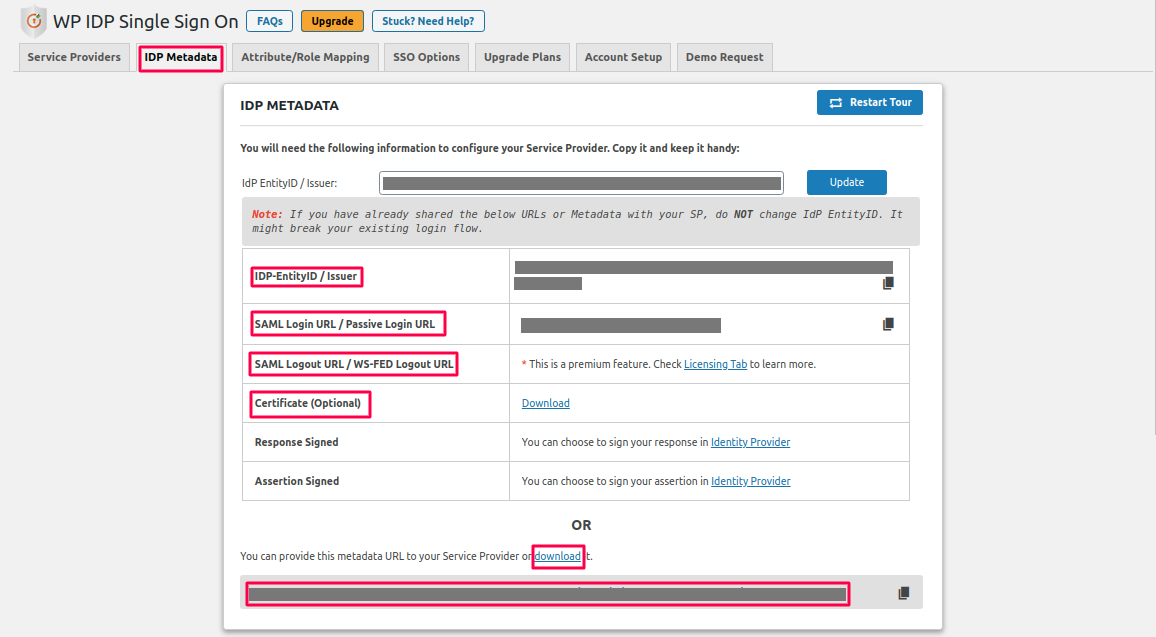
- Go to the miniOrange SAML IDP plugin for WordPress , navigate to the IDP Metadata tab. Here, you can find the Identity Provider Metadata URL or you can Download the Metadata File.
- You will find IDP Entity ID, SAML Login URL, SAML Logout URL (Premium Feature), Certificate. You would need these to configure the Service provider(Canvas LMS).
- You would need these to configure the Service provider(Canvas LMS).
- Login to your Canvas LMS domain as an Account Administrator to configure Canvas LMS SSO and enable Canvas Login with WordPress.
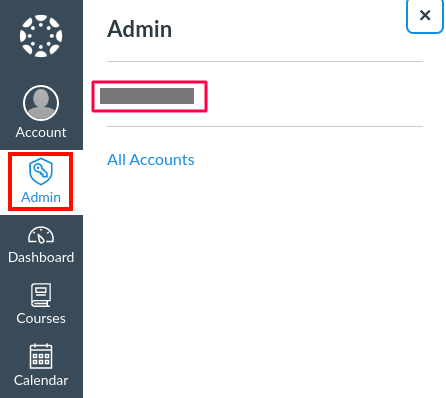
- Switch to Admin view by clicking on the corresponding link from the bottom of the screen.
- Select Admin from the left pane and select the domain for which you wish to enable Single sign-on.
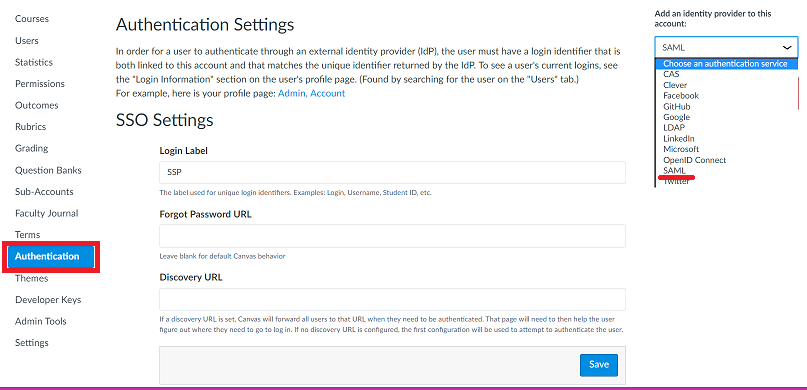
- Click on Authentication in the left pane and navigate to SAML
- Enter the values by referring to the table below.
| IDP Metadata URI | Enter the Metadata URL that points to the metadata document. |
| IDP Entity ID | Enter the IDP Entity value that you got from the previous step. |
| Log On URL | Enter the SAML Login URL that you got from the previous step. |
| Log Out URL | Enter the SAML Logout URL (Premium feature) that you got from the previous step. |
| Certificate Fingerprint |
Follow the steps below to copy the Thumbprint of the certificate:
|
| Login Attribute | NameID |
| Identifier Format | Select urn:oasis:names:tc:SAML:1.1:nameid-format:emailAddress from the dropdown list. |
| Authentication Context | Select urn:oasis:names:tc:SAML:2.0:ac:classes:PasswordProtectedTransport from the dropdown list. |
| Message Signing | Select the algorithm to use for signing request messages sent to the IdP. For now, select Not Signed. |
| Just In Time Provisioning | If enabled, this feature will automatically create a user account in your Canvas LMS if it is the first time a user logs in using Single Sign-On (SSO). |
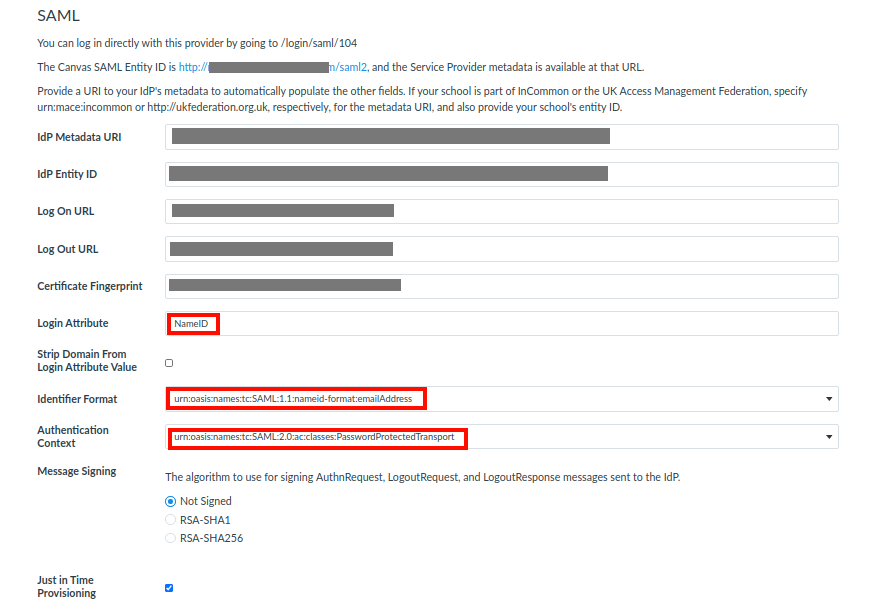
- Click Save to complete the configuration.
Step 2. Configure WordPress (WP) as IDP (Identity Provider)
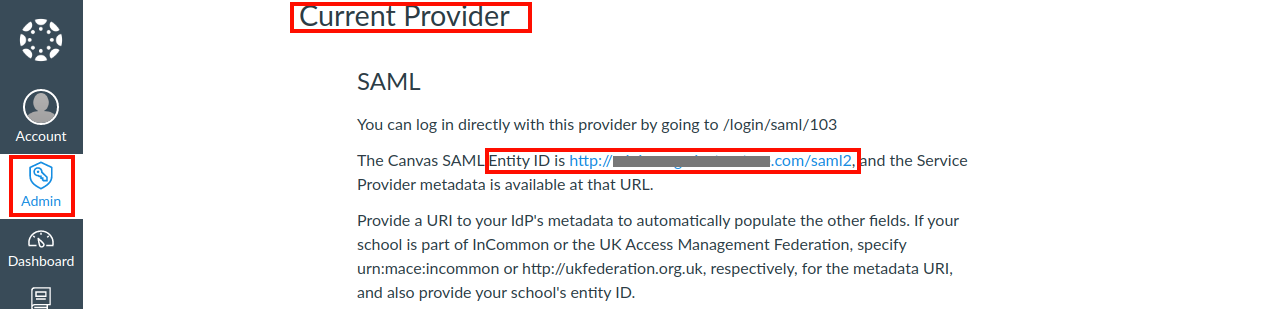
- You would need Entity ID , Acs URL from Canvas LMS .
- You can find this information under Current Provider in Authentication section under Admin tab.
- Click on the Link to find Metadata file containing all the information of your Service Provider
(Canvas LMS).
- Open the WordPress site.
- Go to the miniOrange SAML IDP plugin for WordPress plugin, navigate to the Service Provider tab.
- Enter the values corresponding to the information from Canvas LMS. Refer to the table below.
| Service Provider Name | Name of your Service Provider. |
| SP Entity ID or Issuer | Copy and paste the SP-EntityID from Canvas LMS. |
| ACS URL | Copy and paste the ACS URL from Canvas LMS. |
| NameID Format | urn:oasis:names:tc:SAML:1.1:nameid-format:emailAddress |
| Assertion Signed | Checked |
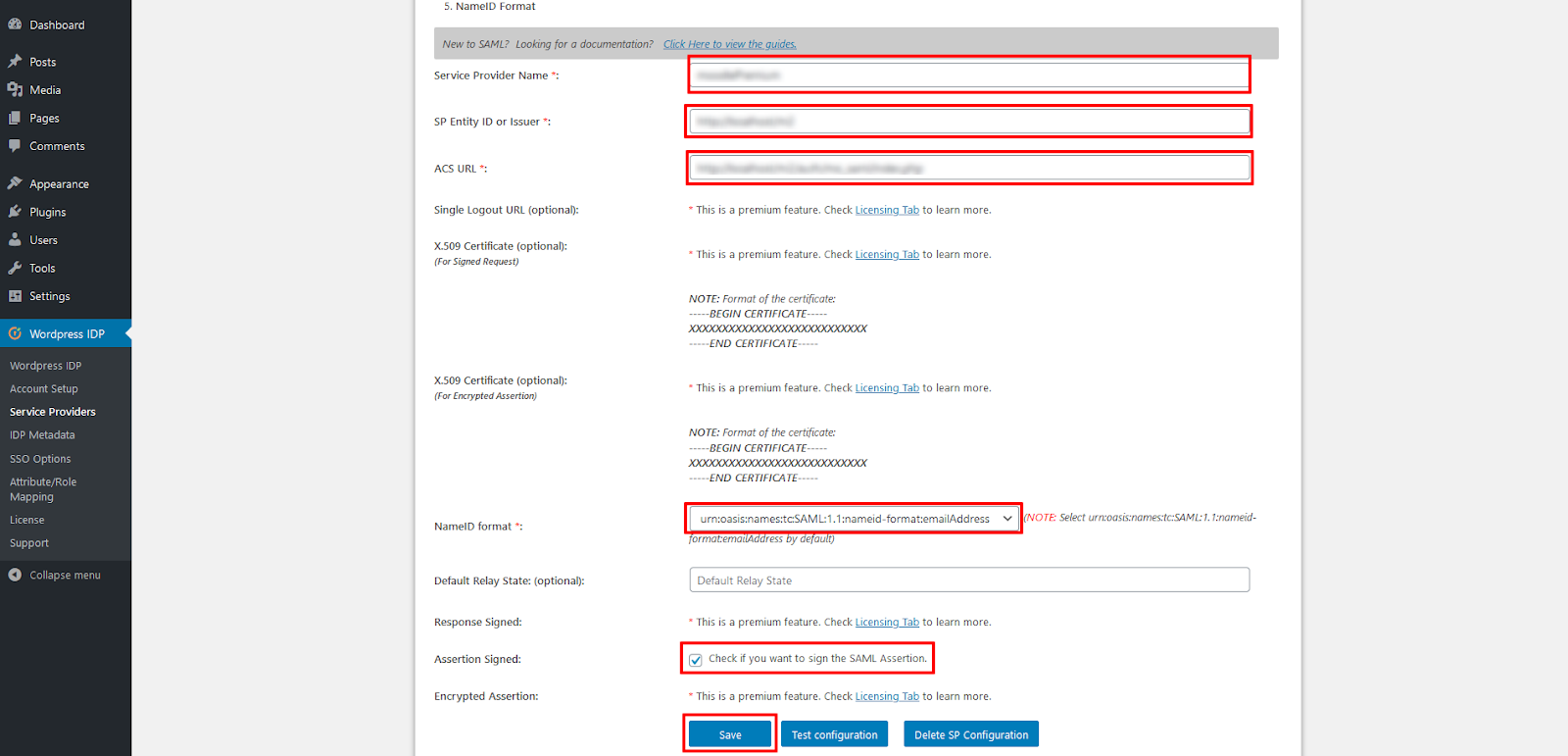
- Click on the Save button to finalize your Canvas Login with WordPress integration using the canvas SSO plugin.
Step 3. Attribute Mapping (This is a premium feature)
In WordPress
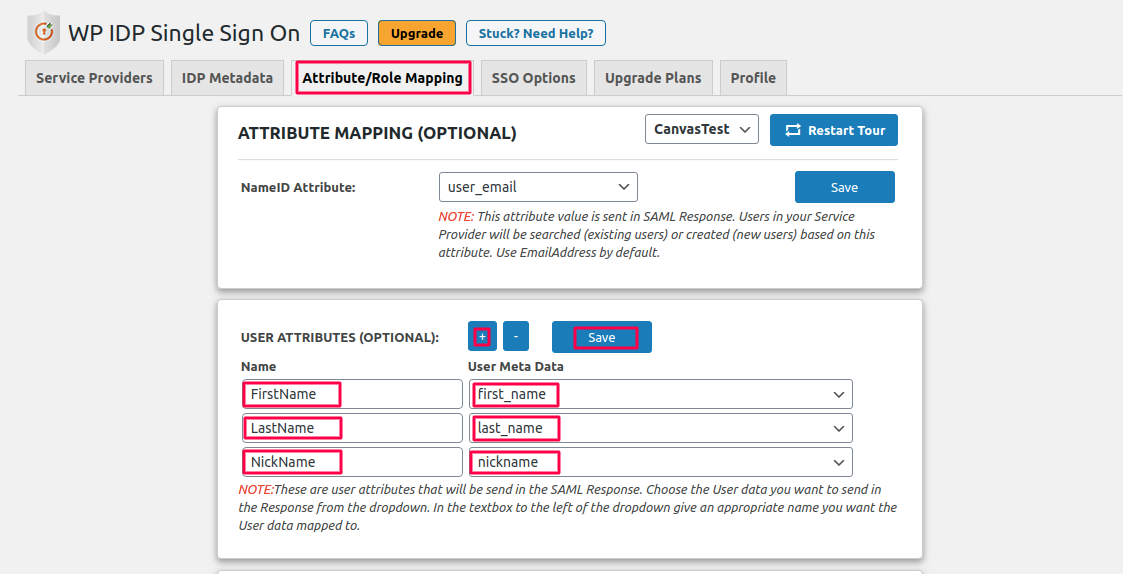
- In the miniOrange SAML IDP plugin for WordPress, navigate to the Attribute/Role Mapping tab to complete Canvas SSO mapping.
- In the User Attributes section, enter the following information and click Save.
- Click on + sign to add attributes.
| Name | User Meta Data |
| FirstName | first_name |
| LastName | last_name |
| NickName | nickname |
In Canvas LMS
- Navigate to Current Provider in Authentication section under the Admin tab. You will find
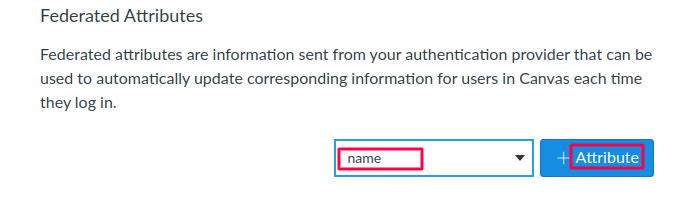
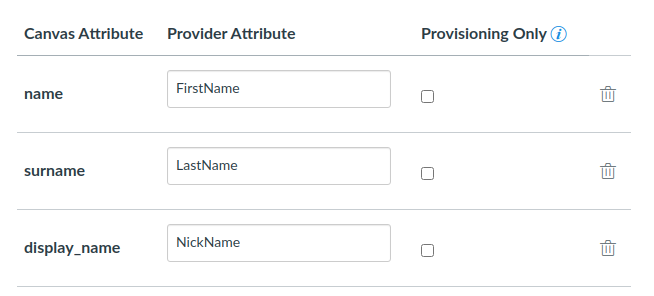
Federated Attributes. - To fully utilize Canvas SSO, make sure to add the following information under Federated Attributes.
- Select the Attribute Name from the dropdown list and click on +Attribute
- If an attribute is marked as Provisioning Only, then it will only be used when Just In Time Provisioning
creates a new user, and will not be kept up to date each time the user logs in.
Step 4. Testing SSO
- You can find the Login link information
under the Current Provider in the Authentication section, under the Admin tab.
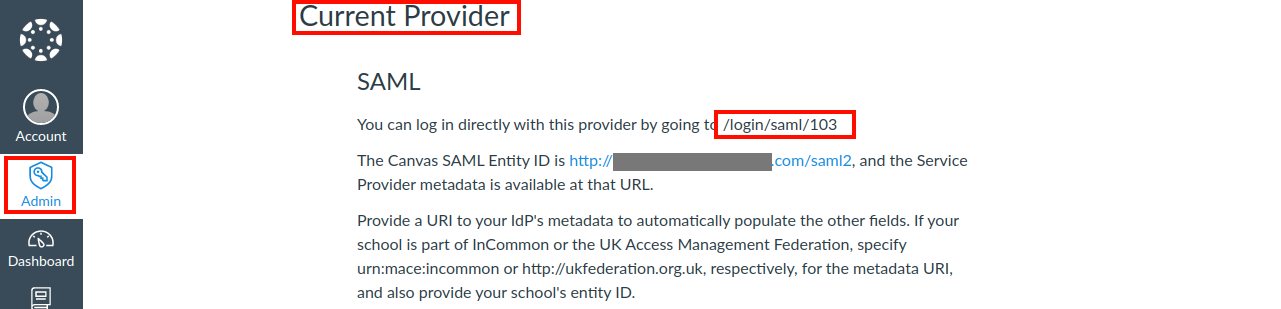
- Construct the login url,
eg: https://your_domain.com/login/saml/103 - You would be redirected to the WordPress Login screen. Enter the Credentials and click Log in.
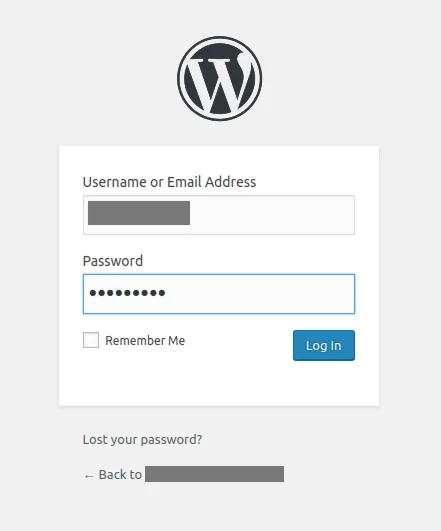
If you were able to access Canvas LMS using Canvas Login with WordPress, then your Canvas LMS SSO configuration is correct.
Related Articles
Thank you for your response. We will get back to you soon.
Something went wrong. Please submit your query again
We'll Reach Out to You at the Earliest!
Why Our Customers choose miniOrange SAML Single Sign-On (SSO) for WordPress Solutions?

 Sign Up

We offer Secure Identity Solutions for Single Sign-On, Two Factor Authentication, Adaptive MFA, Provisioning, and much more. Please contact us at
+1 978 658 9387 (US) | +91 97178 45846 (India) wpidpsupport@xecurify.com


